

Uncategorized
Why Solana Analytics and Token Tracking Actually Matter (and how to read them without getting lost)
Okay, so check this out—Solana metrics can feel like a different language. Wow! They flash numbers at you, then disappear into noise. My instinct said, “don’t panic,” but honestly, something felt off about ignoring on-chain context. Initially I thought raw TPS and block times were the whole story, but then I dug deeper and realized user behavior, token flows, and program-level events tell a very different tale.
Here’s the thing. Transaction counts alone are misleading. Really? Yes. A cluster of tiny transfers from airdrops can inflate daily txn volume while masking actual active user growth. On the other hand, a handful of large swaps or liquidations can create big spikes that matter to markets. So you need both high-res and aggregated views. Hmm… this is where a strong explorer becomes less optional and more like a flashlight in a dark warehouse.
Whoa! The tradeoffs are subtle. Medium-length analysis panels show trends. Long, deep dives reveal causality across contracts, wallets, and markets, and those are the insights that actually help you act—whether you run a bot, audit a token, or just want to avoid getting rug-pulled. I’m biased, but I prefer explorers that let me pivot from a token holder list to program logs in two clicks. Somethin’ about that immediacy matters when you’re chasing a fast-changing market.
What to watch in Solana transactions (without getting overwhelmed)
Short answer: context. Long answer: look at who pays fees, not just how many fees are paid. Seriously? Yes. Fee distribution tells you whether activity is driven by end users or by bots and market makers. Fees concentrated across a few accounts often means programmatic players. Fees broadly distributed tend to indicate genuine user engagement. Actually, wait—let me rephrase that: you should track payer addresses over time and note recurring contributors vs one-off spikes.
Focus on four things. First, the program IDs involved. Second, the top signers or payers. Third, the instruction types within a transaction. Fourth, token mint events and changes to token supply. Those four things, together, help you separate background noise from signal. On one hand this sounds obvious. On the other hand, most casual viewers only scan balances or price. That bugs me.
Tools that show instruction breakdowns and inner instructions are gold. They let you see, for example, if a “swap” call actually did a series of transfers and account creations behind the scenes. That matters when you’re trying to attribute slippage to a single actor or to a protocol-level aggregator. I use this pattern all the time when vetting liquidity pools.
Token tracker hygiene: steps I run every time
Step 1: Verify the mint. Wow! Token address confusion causes half the panic I see. Very very important—check the actual mint on-chain, not just token logos on aggregators. Step 2: Inspect holders and distribution curves. If the top 5 addresses own 70% of supply, assume centralized risk. Step 3: Check recent minting or burning events. Step 4: Scan program interactions—does a known manager program have mint authority?
My instinct says check these in under 10 minutes. Why? Because early warnings matter. If you spot a new authority key suddenly performing mints, you can flag it before markets fully react. On the flip side, many tokens have multisig governance and legitimate rebalances. Initially I thought any mint was suspicious, but then I learned to correlate mints with on-chain governance events and signed messages off-chain.
Also—this is practical—watch the token transfer frequency. Low transfer count plus high holder count often means tokens are air-dropped and dormant. High transfer count concentrated among few addresses suggests exchange or bot activity. These patterns are repeated across projects; they tend to reveal intent.
Why program-level analytics are your superpower
Programs are the business logic of Solana. You can trace how a DeFi strategy unravels by following CPI (cross-program invocation) chains. Hmm… that sentence sounds dense, but it’s true. If an AMM, a lending protocol, and a liquidator all interact within a single block, you get causal chains that matter to price and risk.
When I audit a token or protocol I don’t stop at balances. I map program calls across the last 48 hours, mark recurring instruction patterns, and flag any recent changes to program data. This tells me if a protocol added a new fee, changed an oracle feed, or moved treasury funds. Sometimes a single function upgrade in a program explains sudden changes in price action.
On a tactical level, explorers that expose raw logs and index event types let you reconstruct these stories. If you want to follow exactly where funds flowed after a suspicious swap, you need that level of access. The best explorers combine readable dashboards with the ability to drop into raw transaction JSON—it’s a swiss-army-knife approach and I like it.
Where to look first — a quick checklist
1) Verify token mint and authority. 2) Inspect top holders and recent token movements. 3) Check for program calls and inner instructions. 4) Scan who paid fees and whether same payers repeat. 5) Cross-check with on-chain governance or off-chain announcements. Simple? Not always. Necessary? Absolutely.
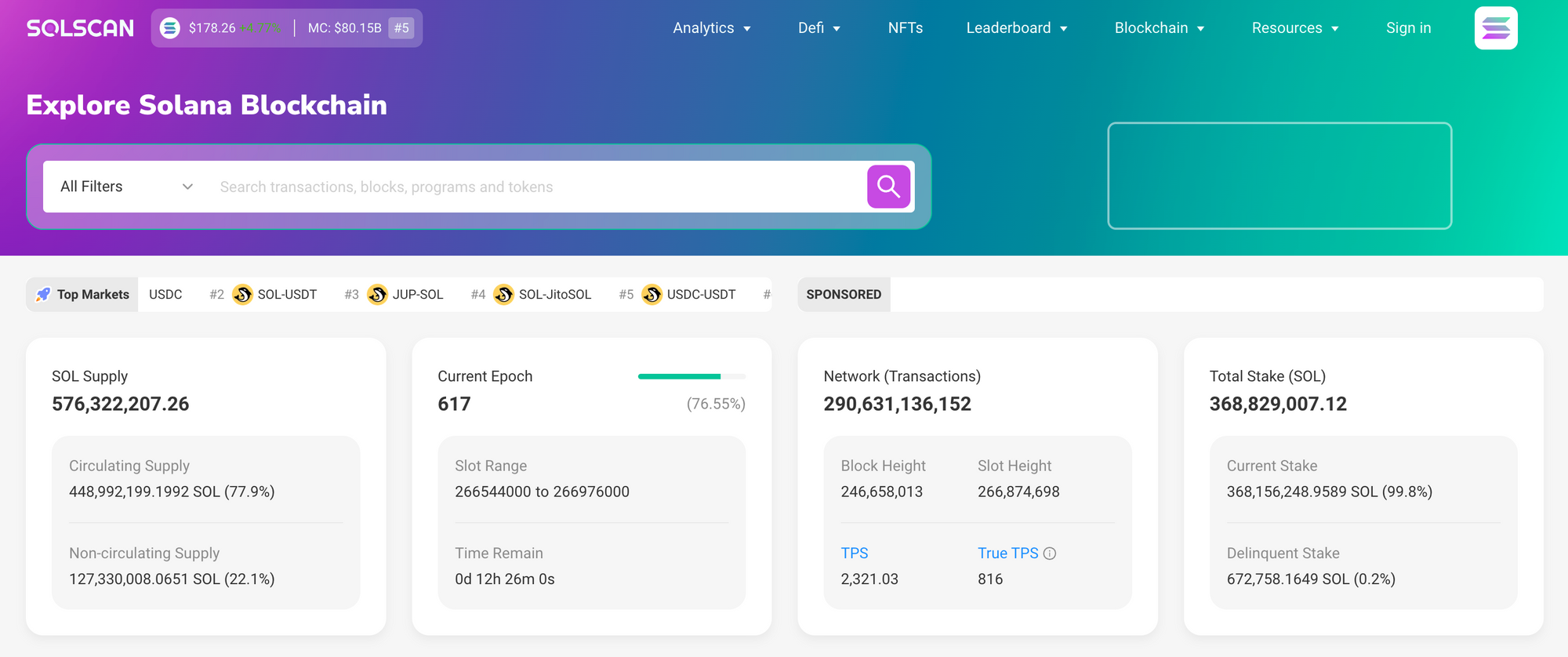
If you want a starting point, try a tool that balances UX and raw data access. For a lot of Solana users I know, that means using explorers that offer both aggregated analytics and a deep-dive mode—where you can see token holders, transaction trees, and program logs without jumping between five tabs. One solid place to begin is the solscan explorer official site which blends those views pretty well and makes tracing token flows straightforward.
Common questions (quick answers)
How do I tell bot activity from human action?
Look at timing and fee patterns. Bots often produce consistent, frequent transactions with the same payer addresses. Humans have more random intervals and varied fee-payers. Also check instruction complexity—bots favor simple, repeatable instructions.
Can I trust token holder lists?
Mostly, but with caution. Holder lists are accurate on-chain, but they don’t explain intent. Combine holder concentration metrics with transfer history and program interactions to understand whether holdings are long-term, exchange-managed, or contract-locked.
What flags mean “investigate further”?
Unusual mint events, sudden concentration shifts, new program authorities, and coordinated movements across multiple tokens. If multiple flags crop up together, that ups the risk profile.
Okay, final thought—I’ll be honest: no explorer replaces judgment. But good on-chain analytics cut down the guessing. They help you move from “that feels risky” to “here’s why it’s risky and what to watch next.” Something I still wrestle with: when to act fast and when to gather more evidence. There’s a rhythm to it, and it gets better with practice… and a few hair-raising mistakes along the way.





0 comments